
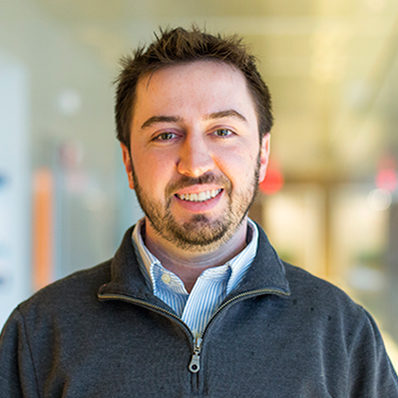
Brian Ellis, University of Michigan, Civil and Environmental Engineering
Location: 1303 EECS
Time: 3:30 PM – 4:30 PM
Abstract:
Broad scientific consensus that anthropogenic greenhouse gas emissions are driving global climate change has motivated significant efforts to decarbonize the energy sector through pathways that capture and securely store CO2 from fossil fuel emissions. Deep geologic reservoirs offer large potential CO2 storage capacities but face the challenge of ensuring CO2 storage security. This presentation will discuss two strategies for secure subsurface storage of CO2: (1) CO2 injection into fractured basalt reservoirs to promote carbon mineralization and (2) utilization of CO2 as a working fluid to produce geothermal energy in sedimentary basins. Basalt formations contain minerals that are highly reactive with CO2-acidified waters and have been demonstrated at the field scale to be viable candidates for CO2 mineral storage. High-pressure flow through experiments and reactive transport modeling studies were conducted to elucidate the mechanisms controlling the location and extent of CO2 mineralization in fractured basalts. Results from this work demonstrated that CO2 mineral precipitation will occur primarily in pathways where fluid transport is diffusion controlled. The concept of utilizing CO2 for sedimentary basin geothermal energy production will also be introduced in this talk, with a focus on exploring challenges and opportunities to deploying this novel energy production strategy.
Biography:
Brian Ellis is an Associate Professor in the Department of Civil and Environment Engineering at the University of Michigan, Ann Arbor. He holds bachelor’s degrees in Geosciences and Economics from the University of Michigan and a Master’s and Ph.D. in Civil and Environmental Engineering from Princeton University. Prior to joining the CEE faculty in 2014, he was a Michigan Society of Fellows Postdoctoral Scholar and an NSF Science, Engineering and Education for Sustainability Fellow at the University of Michigan. His research interests cover topics related to the sustainable development of subsurface energy resources and mitigation of greenhouse gas emissions. Included among these activities are the development of unconventional hydrocarbon reservoirs via hydraulic fracturing, the geologic storage of CO2, the utilization of CO2 in cementitious materials, and the production of geologic hydrogen. His research group investigates the water-rock interactions that occur in these systems through a combination of experimental studies, imaging techniques, and geochemical modeling.