
Living Learning Laboratories
The Institute for Energy Solutions supports the development of Living Learning Laboratories.
Living Learning Laboratories (LLLs) have been defined in various ways, including being called the “co-creation process in integrating research and innovation in a systematic way, on a given territorial context” (Zen 2017). Other researchers define them as “educational environments to prepare students in higher education for future roles; co-creation, real-life setting, multi-stakeholder participation, multi-method approach, and active user involvement” (van den Heuvel et al. 2021). A testbed-focused definition of LLLs is “a human-centric research and development approach in which ICT [information and communications technology] innovations are co-created, tested, and evaluated in open, collaborative, multi-contextual real-world settings” (Ståhlbröst 2008). Another definition of LLLs refers to “any building or group of buildings that can be experimented on but is being used by real people” (de Chalendar et al. 2024). Most LLL definitions include some emphasis on the context of the work in some human-focused or territorial backdrop, a focus on iterative and active feedback from the system, a prominence for collaborative stakeholders, and key elements of research and education.
IES views LLLs broadly as the use of real-world conditions and systems for informing research and education. LLLs can be place-based or based in non-physical forms, like in the cloud. They can be focused on researchers or students, with varying degrees of involvement. They can be focused on a continued manipulation and active control of a real-world condition or a passive observation of a real-world condition. LLLs can be focused around communities, facilities, or systems with endless opportunities for research, learning, and outreach.
2026 LLL Development Grants|2025 LLL Development Grants | LLL Multidisciplinary Design Program (MDP) Projects
Energy-related LLLs at U-M
Through partnership with U-M Facilities and other university resources, IES-affiliated researchers have pursued and established LLLs through which data is regularly gathered and further learning and research is now possible. For example, a US Department of Energy funded project that used U-M campus buildings to conduct grid-interactive building experiments led to a perspectives article in Joule on the opportunities and challenges of using networks of campus buildings for LLLs (de Chalendar et al. 2024). Another example of an LLL project on campus is the University of Michigan Blue Electric Bus system, which was introduced into the U-M bus infrastructure following a fuel consumption and operational analysis.

LLL Map
IES maintains a map of energy-focused LLLs on campus and in the City of Ann Arbor. If you have developed an LLL not included on this list, please contact our team.
For faculty and staff
- If you lead an energy focused LLL project, please complete this form with a description of your work or reach out to [email protected] with details of your work so we can include it in our map.
- If you maintain a physical space on campus or in Ann Arbor with potential for LLL energy research, education, or outreach, please reach out to [email protected].
- If you have resources, reports, papers, or other products related to LLLs that you would like us to feature on this page, please reach out to [email protected].
2026 LLL Development Grants
Elevating Learning, Outreach, Research, and Translation for Campus NEWtrient Circularity with MBGNA
Project leads: Nancy Love (Borchardt and Glysson Collegiate Professor and JoAnn Silverstein Distinguished University Professor in Civil and Environmental Engineering), Jeremy Moghtader (Assistant Director for Campus as Lab at the Matthaei Botanical Gardens and Nichols Arboretum, Adjunct Lecturer in Program in the Environment)
Site collaborators: Matthaei Botanical Gardens and Nichols Arboretum
Goal: This project will scale U-M’s NEWtrient Circularity system, designed to capture nutrient-rich nitrogen, phosphorus, and potassium from human urine and convert it into a safe, licensed fertilizer product for use on horticultural applications on campus, with the option to up-scale and produce materials for neighboring communities. The project will generate educational materials for K-12, college students, and the general public. It will enable the development of events to expose large populations, including football crowds, to the energy efficient benefits of nutrient circularity.
Impact: This project will translate the small but successful NEWtrient Circularity System into a publicly visible living learning laboratory that will: support more research on campus by producing a way to have more nutrient-rich nutrient feedstock; will produce knowledge, educational products, and other information-support programming for K-12, U-M classrooms, and the general public; will reduce MBGNA’s reliance on external fertilizer purchases; generate a cumulative energy demand toolkit for use in college curricula; and will launch a new sustainability initiative in association with Michigan Football.
U-M Living Learning Lab: A virtual utility control room for campus decarbonization
Project leads: Rabab Haider (Assistant Professor in Civil and Environmental Engineering), Majdi Radaideh (Assistant Professor in Nuclear Engineering and Radiological Sciences), Vera Q. Liao (Associate Professor of Computer Science & Engineering)
Site collaborators: U-M Utilities
Goal: This project will develop a Virtual Utility Control Center (VUCC): an energy-focused Living Learning Lab developed in partnership with U-M Utilities to evaluate the operational feasibility of micro modular reactors (MMRs) for campus decarbonization. The team will build a computational testbed integrating real U-M Utilities operational data with an MMR simulator and AI-based dispatch tools as the computational engine of the VUCC. Working with U-M Utilities, we will co-design an operator interface for AI as a decision support tool. The VUCC will be used to evaluate future operating scenarios under the buildout of the proposed Maize Rays solar installation.
Impact: The VUCC will generate new research at the intersection of power systems, nuclear engineering, and human-AI interaction, to guide campus decarbonization. The living learning lab will train undergraduate and graduate students to work with real-world data and utility partners, supporting skill development in lab-to-field technology transfer. U-M Utilities staff will participate as co-designers and study participants, embedding practitioner learning into the research process. A publicly accessible version of the VUCC will serve as an open platform for peer institutions evaluating similar decarbonization pathways.
GeoLearn: Geo-Exchange Infrastructure Modeling, Optimization, and Cross-Campus Engagement
Project leads: Brian Ellis (Associate Professor of Civil and Environmental Engineering), Greg Keoleian (Pete M. Wege Endowed Professor of Sustainable Systems in SEAS)
Site collaborators: U-M Utilities
Goal: We propose to use U-M’s campus geo-exchange infrastructure as a Living Learning Laboratory (LLL) to advance geothermal research, education, and outreach. The LLL will produce: (1) a calibrated subsurface thermal model for U-M’s 99-well borefield characterizing gaps between modeled and actual performance, evaluating alternative well configurations, and identifying data needs for future geothermal investments; and (2) a real-time campus geothermal energy dashboard enabling students and the community to visualize live subsurface data and analyze the carbon reduction benefits of the Hayward and Ginsburg systems. The project partners with U-M Utilities in direct support of Campus Plan 2050 carbon neutrality goals.
Impact: This LLL will produce models and tools supporting U-M’s path to carbon neutrality by improving the predictive accuracy of geo-exchange system design and reducing risk for future capital investments. The real-time energy dashboard will enhance energy literacy and experiential learning for thousands of U-M students, connecting subsurface earth science to campus sustainability. The project will also develop an energy and emissions model quantifying the impact of existing and future geo-exchange systems. These outputs create a foundation for federal funding (DOE, NSF), position U-M as a national model for university geothermal LLLs, and generate peer-reviewed publications advancing geothermal modeling practice.
2025 LLL Development Grants
The Bioenergy Innovation at the Campus Farm: Electro-fermentation of Waste Biomass into Sustainable Fuels through Community-Engaged Research and Education
Project leads: Joshua Jack (Assistant Professor in Civil and Environmental Engineering, CoE), Benjamin Goldstein (Assistant Professor in SEAS), Jeremy Moghtader (Program Manager at the Campus Farm and Adjunct Lecturer in Program in the Environment, SEAS and LSA)
Site collaborators: Matthaei Botanical Gardens and Nichols Arboretum
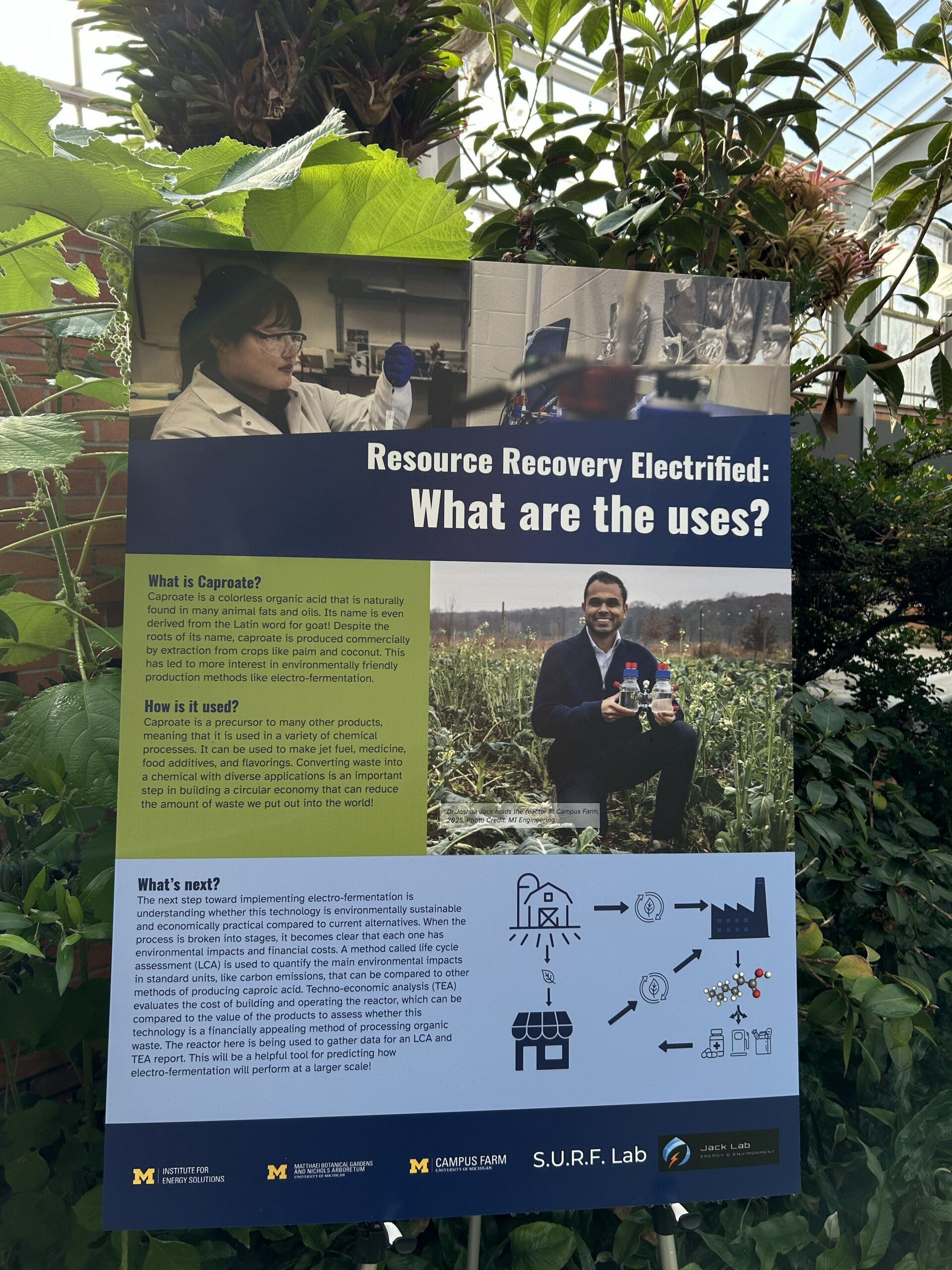
Goal: This project will launch a transformative Bioenergy Living Learning Lab at the Campus Farm, immersing students in hands-on learning and applied research at the intersection of sustainability, energy, and biotechnology. In partnership with the Matthaei Botanical Gardens and Nichols Arboretum, the project team will build a bioreactor testbed to advance innovative electro-fermentation processes. The living learning lab aims to support novel data collection and translational research by utilizing waste generated through Matthaei Botanical Gardens’ normal operations. The living learning lab will also serve as a new platform for developing teaching modules, student training in research and science communication, and energizing public outreach in bioenergy innovation.
Impact: The Bioenergy living learning lab will drive innovation in research by creating unique opportunities to obtain critical data on biofuel production from complex wastes and develop cutting-edge waste-to-energy techno-economic analyses and life cycle assessment models, advancing both basic science and applied research. The living learning lab will also serve as a community engagement hub, inspiring thousands of visitors annually through highly accessible outreach events and waste-to-energy demonstrations. The living learning lab will also help educate undergraduate and graduate students through innovative hands-on learning and train the next generation of energy professionals to better communicate with the public through robust community-based knowledge sharing opportunities.
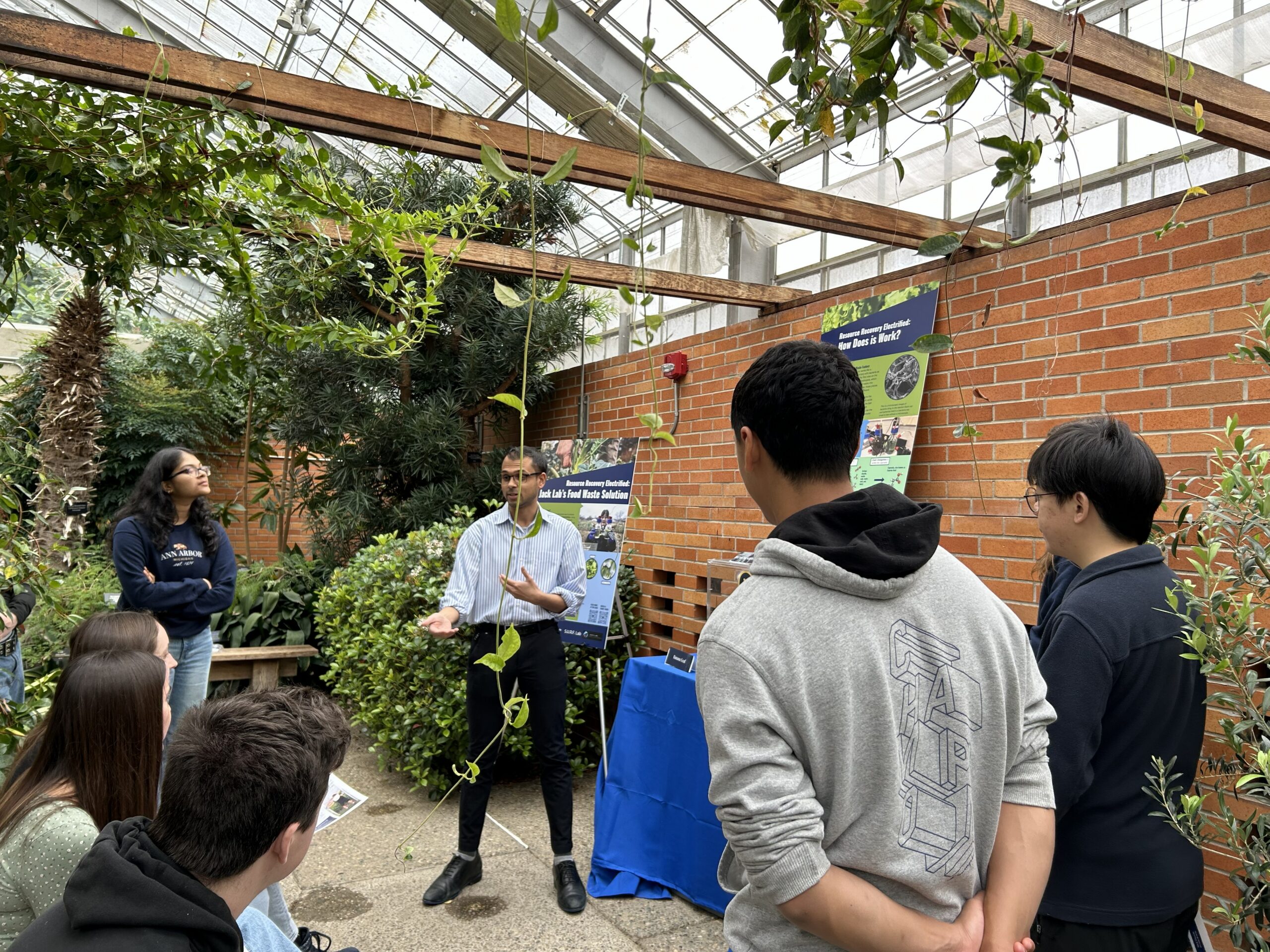
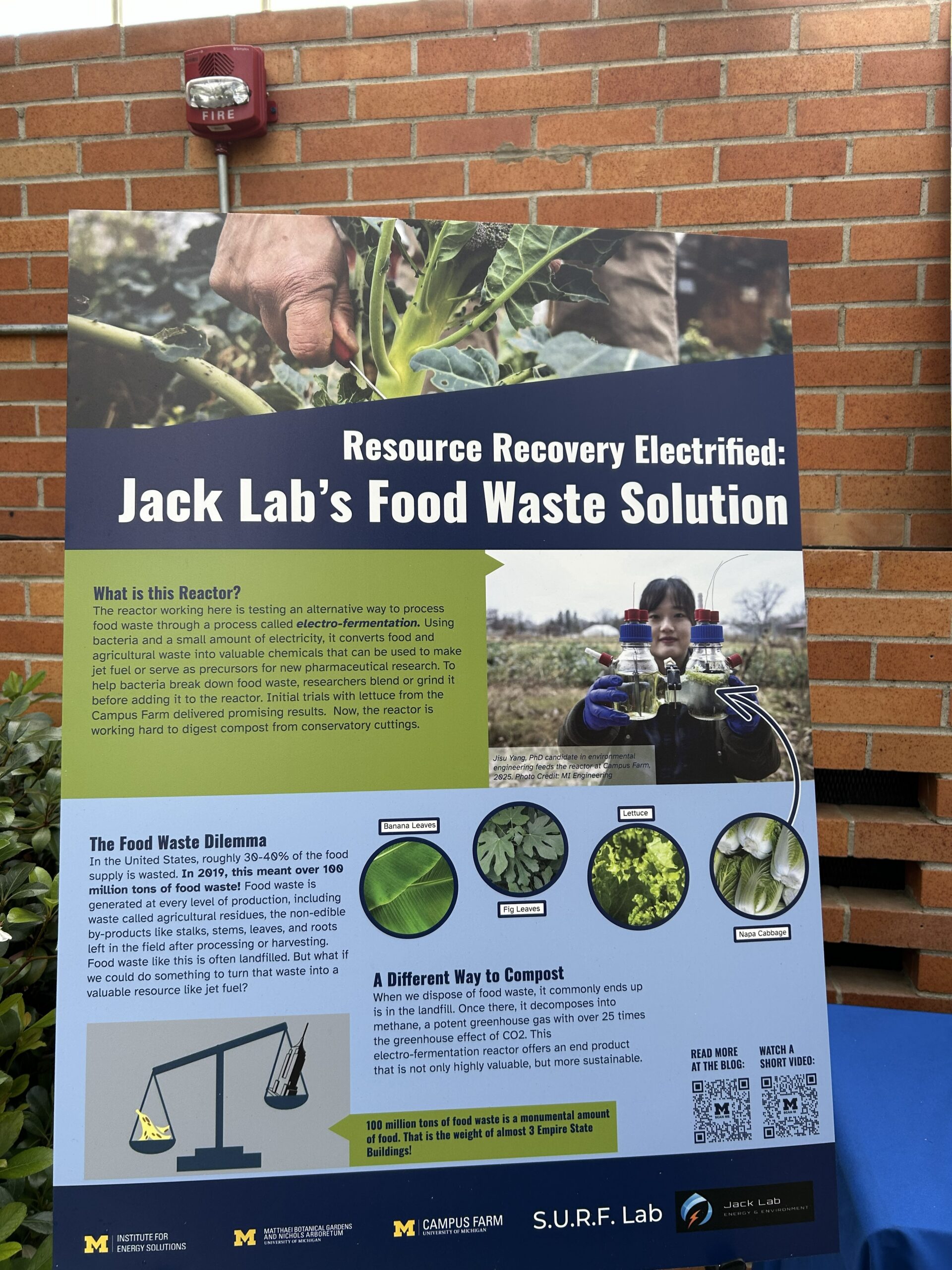 Resource Recovery Electrified – Jack Lab’s Food Waste Solutions – Signage near Electrofermentation display

A Community-facing Test Bed for Beneficial Electrification Technologies and the Public’s Understanding of Them
Project leads: Parth Vaishnav (Assistant Professor in SEAS), Anish Tuteja (Professor in Materials Science and Engineering, CoE)
Site collaborators: Leslie Science & Nature Center, in partnership with the City of Ann Arbor
Goal: This project will fully electrify the 25-year-old DTE Energy House at the Leslie Science & Nature Center, replacing its fossil gas boiler with an air source heat pump and the gas stove with an induction range. Leveraging this transformation, the team will conduct multidisciplinary research to gather critical cold-climate performance data on heat pumps, including defrost cycles; evaluate a novel frost-preventing coating on heat pump surfaces; and evaluate communication strategies to enhance public knowledge and adoption willingness regarding heat pumps and induction technology. The project will inform systems analyses, help improve technology, and test effective communication strategies.
Impact: This project will generate public data on cold-climate heat pump performance and evaluate innovative frost-prevention coatings, advancing sustainable building technologies. Data aims to support research and education at U-M, and educational opportunities for thousands of visitors to the LSNC and others via media outreach. The outreach will serve as an ongoing testbed to form and test hypotheses about the effectiveness of communication strategies. The whole project will support Ann Arbor and the Leslie Science & Nature Center on their climate action goals, reducing emissions and enhancing community resilience.

Hydrovoltaic-Powered Soil Sensor Networks for Energy-Autonomous Living Learning Laboratories at Matthaei Botanical Gardens
Project leads: Albert Liu (Assistant Professor in Chemical Engineering, CoE), Aline Eid (Assistant Professor in Electrical and Computer Engineering, CoE), Brendan O’Neill (Assistant Research Scientist in SEAS)
Site collaborators: Matthaei Botanical Gardens and Nichols Arboretum
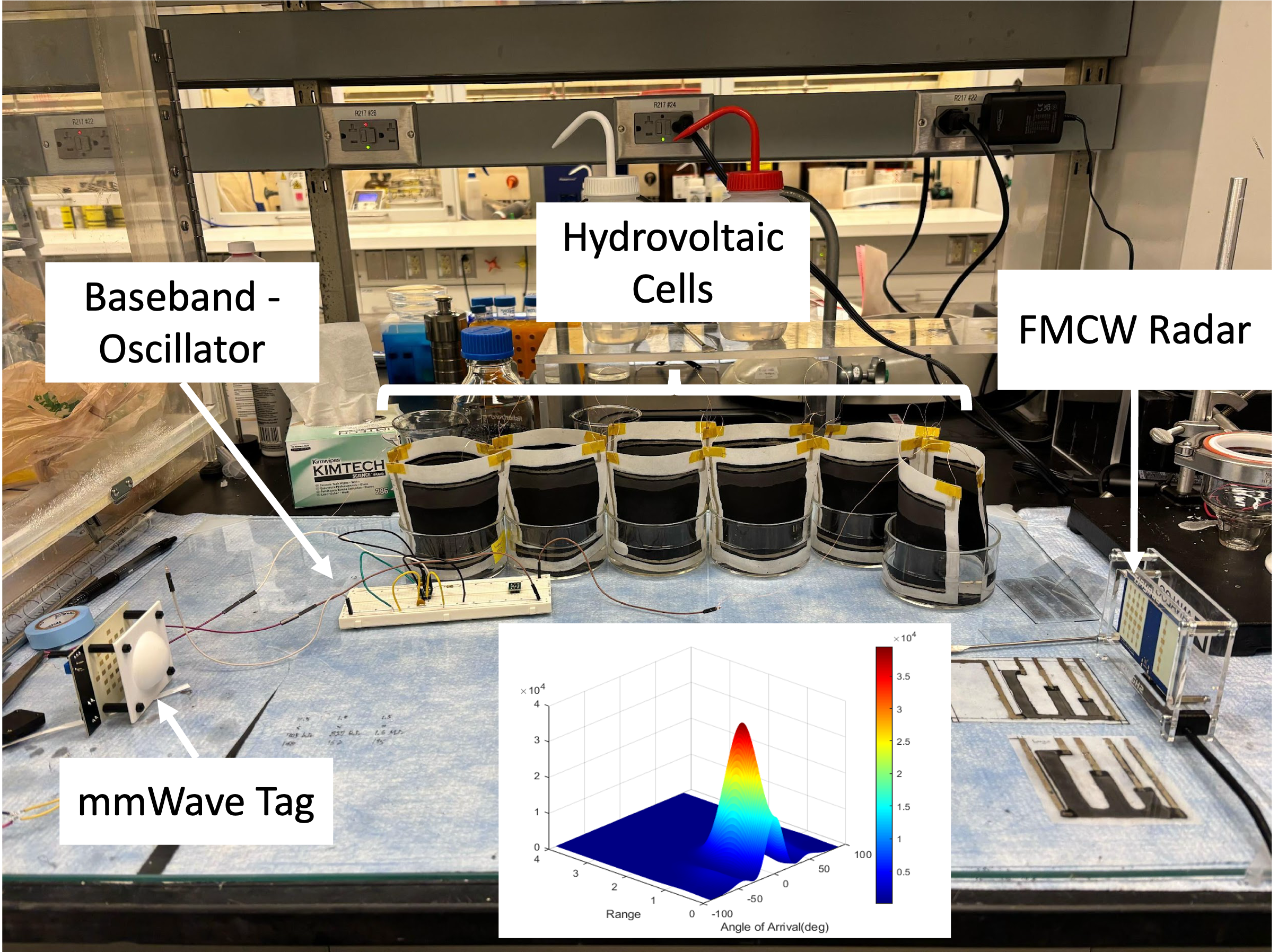
Goal: This energy-focused living learning lab at Matthaei Botanical Gardens will deploy and field-test hydrovoltaic-powered wireless soil sensors that harvest energy from soil moisture. These battery-free, biodegradable sensors will provide real-time data on soil moisture, nutrients, and contaminants such as excess nitrate and phosphorus. The system will serve as a testbed for sustainable, energy-autonomous sensing and support a new ENG 100 undergraduate lab module, a public-facing data dashboard, and K-12 outreach in collaboration with Matthaei Botanical Gardens’ education team. This project integrates clean energy innovation, environmental monitoring, and experiential learning, advancing U-M’s mission in sustainability, research and community engagement.
Impact: This project will validate a novel, energy-autonomous sensor platform for real-time environmental monitoring and support foundational research in clean energy systems. Educational outcomes include training over 200 undergraduates annually through a new ENG 100 lab module and engaging student veterans and graduate mentors in interdisciplinary research. Outreach activities, co-developed with Matthaei Botanical Gardens, will reach more than 500 K-12 students through field visits and hands-on learning. The living learning lab will serve as a scalable model for sustainable energy education and infrastructure innovation.
 Energy autonomous sensor development

LLL Multidisciplinary Design Program (MDP) Projects
IES is partnering with the Multidisciplinary Design Program (MDP) to support two MDP projects starting in January 2026. The goal is to catalyze student engagement in energy-related living learning labs.
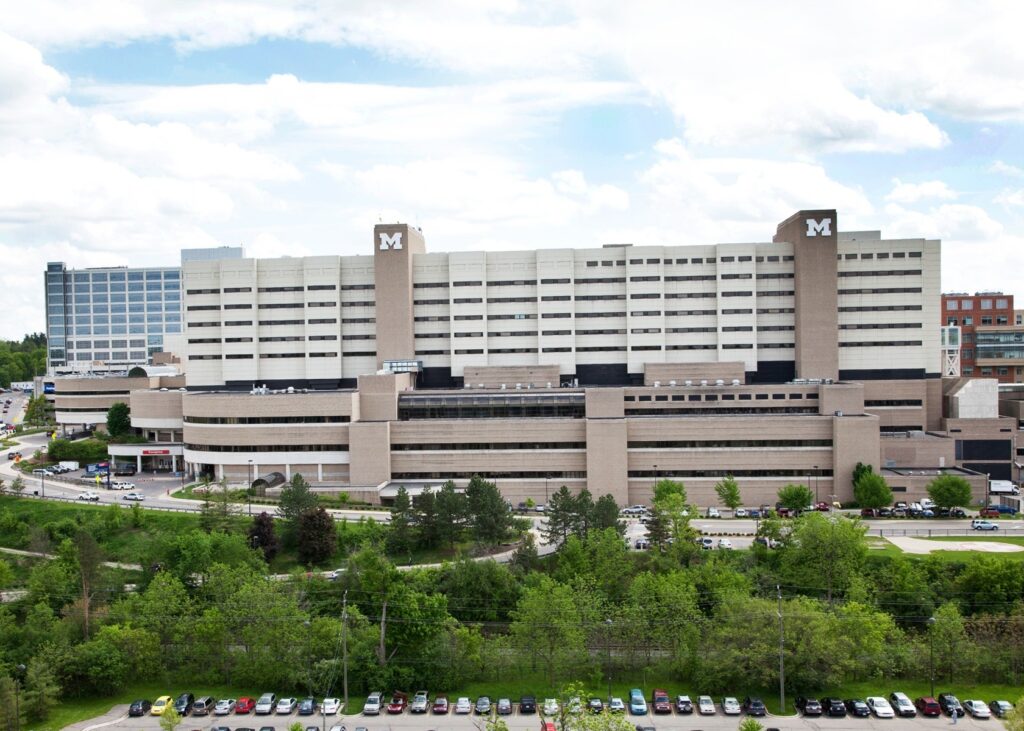
Partnering with UM Health, the first project will improve the energy efficiency of processed chilled water for critical medical equipment. A student team will help modernize one of the most energy-intensive systems on campus, building a simulation of this system and exploring strategies to reduce energy use and cost. This dedicated chilled water plant operates with four chillers and costs approximately $1.6 million per year, with half of that cost coming from electricity use alone — small improvements could lead to significant cost savings and environmental impact. Students will use knowledge and skills from thermodynamics, energy modeling, simulation, and optimization in this real world, critical system. This project is being funded by the Institute for Energy Solutions, in partnership with the University of Michigan Health. Learn more about “Energy Modeling for Increased Efficiency”.
Partnering with the Matthaei Botanical Gardens and Nichols Arboretum (MBGNA) Campus Farms, the second project will optimize energy management of solar-powered infrastructure at the Campus Farm. A student team will apply real-time optimization, control systems, and machine learning to redesign the energy management system (EMS) for UM’s Campus Farm. The campus farm uses a 13.2 kW ground mounted solar array, an electric produce cooler, and a Ford F-150 Lightning delivery vehicle, which are critical to their operations. Optimizing the EMS to manage these components will help the farm meet its 2026 carbon neutrality goals. This project is being funded by the Institute for Energy Solutions, in partnership with the Campus Farm. Learn more about “Smart Energy Systems: Optimizing Solar, Storage, & EV Integration”.

Learn more about the Multidisciplinary Design Program.
Citations
- Zen, I. S. (2017, September 4). Exploring the Living Learning Laboratory: An Approach to strengthen campus sustainability initiatives by using sustainability science Approach. International Journal of Sustainability in Higher Education, 18(6), 939-955. https://www.emerald.com/insight/content/doi/10.1108/IJSHE-09-2015-0154/full/html#ref042
- van den Heuvel, R., Braun, S., de Bruin, M., & Daniels, R. (2021). A Closer Look at Living Labs and Higher Education using a Scoping Review. Technology Innovation Management Review, 11(9), N/A. https://timreview.ca/article/1463
- Ståhlbröst, A. (2008). Forming future IT: the living lab way of user involvement. Lulea University of Technology – Doctoral Thesis, 139. https://www.diva-portal.org/smash/record.jsf?pid=diva2%3A999816&dswid=-7195
- de Chalendar, J. A., Keskar, A., Johnson, J. X., & Mathieu, J. L. (2024, January 17). Living laboratories can and should play a greater role to unlock flexibility in United States commercial buildings. Joule, 8(1), 13-28. https://www.sciencedirect.com/science/article/pii/S254243512300483X?ref=pdf_download&fr=RR-2&rr=8435f961186e10ee